Key Takeaways
- All-weather tires with the mountain snowflake symbol ARE legal on BC highways from October 1 to April 30 — M+S alone is the minimum but not ideal for Kamloops conditions
- True winter tires still outperform all-weather tires in extreme cold and heavy snow, but all-weathers are a solid year-round compromise
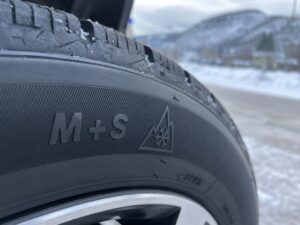
- The mountain snowflake symbol (3PMSF) means the tire passed actual snow traction testing — M+S is just a tread pattern designation
- For drivers who stick mostly to Kamloops city streets, all-weather tires can eliminate the hassle of seasonal changeovers
- If you regularly drive the Coquihalla or Yellowhead in winter, dedicated winter tires are still the safer choice
Yes, all-weather tires in Kamloops meet BC’s legal highway requirements — but only if they carry the mountain snowflake symbol. That’s the short answer. The longer answer involves understanding what that symbol actually means, how these tires perform on Interior roads, and whether they’re the right choice for how you actually drive.
We get this question constantly at the shop, especially in September and October when drivers are trying to figure out their tire situation before the regulations kick in. So let me break down what you actually need to know.
What BC Law Actually Requires (And What the Symbols Mean)
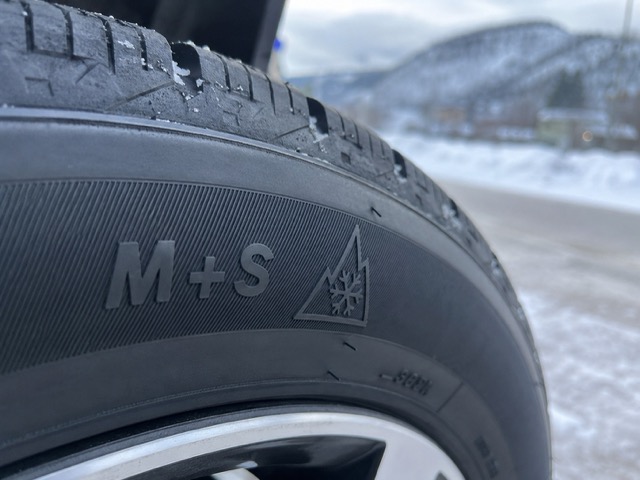
From October 1 to April 30, BC requires winter tires on most highways, including Highway 5 (Coquihalla), Highway 97, and Highway 1 through the Fraser Canyon. The BC government’s official requirements state that tires must have either the M+S (mud and snow) designation OR the mountain snowflake symbol (3PMSF).
M+S vs. Mountain Snowflake — There’s a Big Difference
Here’s where it gets confusing. M+S is a self-designated label — tire manufacturers can slap it on any tire with a tread pattern they consider suitable for mud and snow. There’s no standardized testing required. Many basic all-season tires carry M+S markings but perform poorly in actual winter conditions.
The mountain snowflake symbol is different. A tire only gets this marking after passing a standardized traction test on packed snow. It means the tire met a specific performance threshold — not just that it looks like it might work in snow.
Where All-Weather Tires Fit In
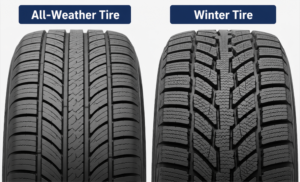
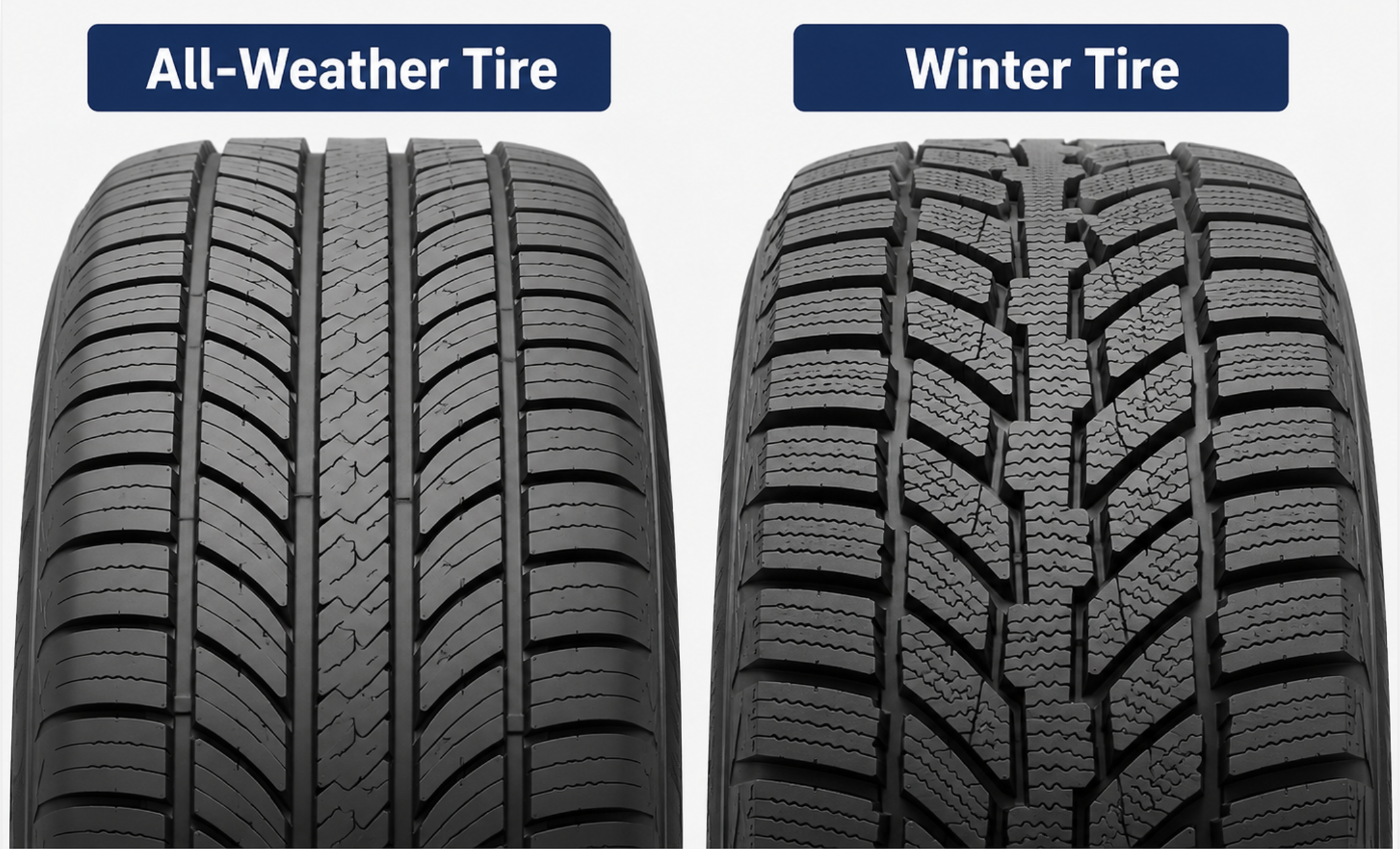
All-weather tires (not to be confused with all-season tires) are designed to handle both summer and winter conditions without seasonal changeovers. The good ones carry the mountain snowflake symbol, which means they’re fully legal on BC highways year-round. They use a rubber compound that stays flexible in cold temperatures while still performing reasonably in summer heat.
How All-Weather Tires Actually Perform in Kamloops
Kamloops has a unique climate. We get cold winters, but we’re not buried in snow like the Okanagan Connector or the Coquihalla summit. Our roads see a lot of freeze-thaw cycles, black ice, and the occasional heavy snowfall followed by bare pavement a few days later.
For drivers who mostly stay in town — commuting to work, running errands, occasional trips to Sun Peaks — all-weather tires with the snowflake symbol are a practical choice. You get legitimate winter capability without the hassle and cost of storing a second set of tires and paying for changeovers twice a year.
Where All-Weathers Shine
All-weather tires work well when temperatures hover between -15°C and +15°C, which covers most of a Kamloops winter. They handle light to moderate snow, slush, and cold rain effectively. On our tires and wheels service page, we help customers match the right tire to their actual driving patterns.
Where They Fall Short
When temperatures drop below -20°C or we get a serious dump of snow, dedicated winter tires still outperform all-weathers. The rubber compounds in true winter tires are specifically engineered for extreme cold — they stay pliable when all-weathers start to stiffen. If you’re regularly crossing the Coquihalla in January or driving up to Sun Peaks every weekend, winter tires remain the better investment.
The Real Cost Comparison
People often assume all-weather tires save money because you only buy one set. That’s partially true, but the math isn’t as simple as it looks.
A quality set of all-weather tires with the mountain snowflake symbol typically runs $150-$250 per tire, depending on size. They’ll last roughly 60,000-80,000 km with proper rotation and alignment. You also save on seasonal changeover costs — typically $60-$100 per swap if you’re using the same rims.
Winter tires plus a separate set of all-seasons costs more upfront, but each set lasts longer because you’re only using them half the year. Over a 5-year period, the total cost difference is usually minimal.
The Convenience Factor
Where all-weathers really win is convenience. No scrambling to book appointments in October when everyone else remembers they need winter tires. No storing a set in your garage or paying for tire storage. If that convenience matters to you, the slight performance trade-off might be worth it.
Our Honest Recommendation
At Brock Auto Centre, we don’t push one tire type over another. What makes sense depends on how you drive and where you go.
Consider all-weather tires if:
- You mostly drive within Kamloops city limits
- You make occasional trips on Highway 1 or 97 but avoid the Coquihalla in bad weather
- You want a set-it-and-forget-it solution
- You don’t have space to store a second set of tires
Stick with dedicated winter tires if:
- You regularly drive the Coquihalla, Connector, or Yellowhead in winter
- You commute to Sun Peaks or other mountain destinations
- You prioritize maximum traction over convenience
- Your vehicle is rear-wheel drive (they need all the help they can get)
We’ve installed thousands of tires on Kamloops vehicles over the years, and we can look at your driving patterns and help you make a sensible choice. Our scheduled maintenance services include tire inspections where we check tread depth, wear patterns, and overall condition — we’ll tell you honestly when your tires need attention.
What to Look for When Buying All-Weather Tires
If you decide all-weather tires make sense for you, here’s what to check:
Confirm the mountain snowflake symbol. Don’t assume — look at the sidewall. Some tires marketed as “all-weather” only carry M+S markings. According to the Transport Canada winter driving guidelines, the snowflake symbol indicates the tire meets specific snow traction standards.
Check the speed rating. All-weather tires sometimes have lower speed ratings than summer tires. Make sure the rating matches your vehicle’s requirements.
Consider your vehicle type. Heavier trucks and SUVs need tires rated for their weight. A tire that works fine on a Civic might not cut it on a fully-loaded F-150.
Don’t mix tire types. All four tires should be the same type. Mixing all-weathers with all-seasons or winter tires creates unpredictable handling — especially in emergency braking or evasive manoeuvres.
The Bottom Line
All-weather tires with the mountain snowflake symbol are a legitimate, legal option for Kamloops drivers. They’re not a gimmick, and they’re not cutting corners on safety — they’re a practical middle ground for people whose driving doesn’t demand maximum winter performance. Just make sure you’re buying the real thing and not a relabeled all-season tire.
If you’re unsure what makes sense for your vehicle and your driving, come by the shop. We’ll look at your tires, talk about where you actually drive, and give you a straight answer — no upselling, just honest advice. Contact us at Brock Auto Centre to set up a time.
About the Author: Steve is a co-owner of Brock Auto Centre on Tranquille Road in Kamloops. With years of hands-on experience in the automotive industry, he’s committed to giving customers straight answers about their vehicles — including when the answer is “you don’t need that yet.”