All-Weather Tires vs Winter Tires: What Kamloops Drivers Need to Know About BC Highway Rules
Key Takeaways
- Both all-weather and winter tires with the mountain snowflake symbol meet BC highway requirements from October 1 to April 30
- M+S (mud and snow) tires alone are no longer sufficient on most BC highways — you need the three-peak mountain snowflake
- All-weather tires are a year-round option, but winter tires outperform them in temperatures below -15°C
- Kamloops’ variable conditions — from cold valley mornings to icy Coquihalla runs — make tire choice more important than in milder climates
- The right choice depends on where you drive, not just where you live
The Short Answer: Both Can Be Legal, But Legal Isn’t Always Best
Here’s the straightforward answer on all-weather tires vs winter tires in Kamloops: both meet BC highway requirements as long as they carry the three-peak mountain snowflake symbol. But meeting the legal minimum and staying safe on our roads are two different conversations.
I’ve had dozens of customers come in thinking their M+S tires are good enough for the Coquihalla or Connector. They’re not — at least not anymore on most designated highways. The BC government’s winter tire requirements changed a few years back, and many drivers still haven’t caught up.
Let me break down what actually matters for Kamloops drivers.
Understanding the Mountain Snowflake vs M+S Rating
What the Symbols Actually Mean
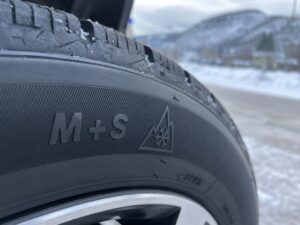
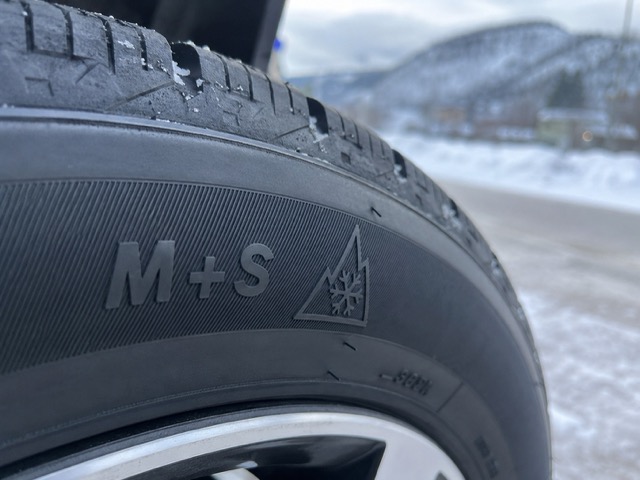
Every tire on the market has markings on the sidewall. Two matter for BC winter driving laws:
M+S (Mud and Snow): This is a self-certified rating. Manufacturers can slap this on any tire that meets basic tread design criteria. It doesn’t require any actual winter performance testing.
Three-Peak Mountain Snowflake: This symbol means the tire passed standardized snow traction tests. It’s earned, not just claimed.
Here’s where it gets confusing. On some BC highways, M+S tires with at least 3.5mm tread depth are still technically legal. But on most major routes — including Highway 5 (Coquihalla), Highway 97C (Connector), and Highway 1 through Rogers Pass — you need that mountain snowflake symbol from October 1 to April 30.
Why This Matters in Kamloops
We sit in the middle of serious mountain driving. Head west to Vancouver? You’re climbing the Coquihalla. East to the Rockies? Rogers Pass. South to the Okanagan? The Connector. All of these routes require mountain snowflake-rated tires during winter months. Living in Kamloops means you’re surrounded by highways where basic M+S tires won’t cut it legally — or practically.
All-Weather Tires: The Year-Round Compromise
What They Are
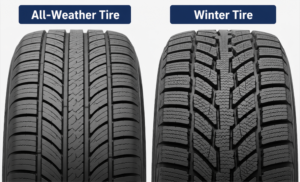
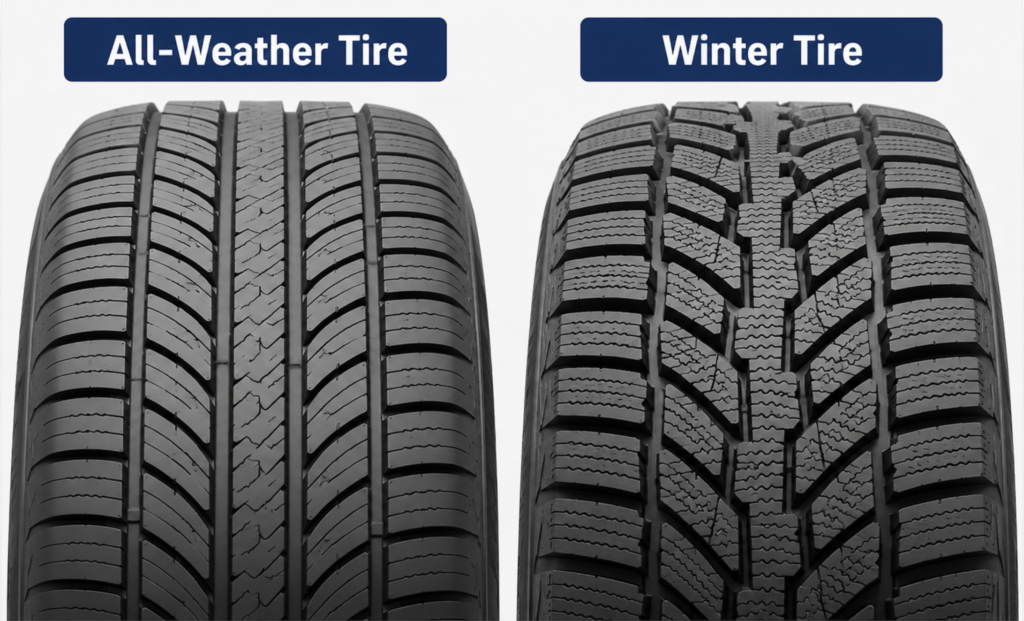
All-weather tires (not to be confused with all-season tires) carry the mountain snowflake symbol while being designed for year-round use. They’re a hybrid — harder rubber than dedicated winters, softer than pure summer tires.
The Pros
For many Kamloops drivers, all-weather tires make practical sense. You don’t need to swap tires twice a year, which saves on mounting and storage costs. They’re legal on all BC highways year-round. And if you mostly drive around town with occasional highway trips, they handle our conditions reasonably well.
The Cons
Here’s where I’ll be straight with you: all-weather tires are a compromise. In deep cold — and we get weeks below -15°C in Kamloops most winters — the rubber compound in all-weather tires stiffens up more than dedicated winter rubber. That means longer stopping distances and less grip when you need it most.
I see this every January. Customers with good all-weather tires still struggle on icy mornings in the North Shore or climbing out of the valley toward Sun Peaks. The tires are legal. They’re just not optimal.
If you’re considering new rubber, our tires and wheels service includes honest advice on what actually makes sense for your driving patterns — not just what’s easiest to sell.
Winter Tires: Built for the Cold
How They’re Different
Dedicated winter tires use a softer rubber compound that stays pliable in freezing temperatures. The tread patterns are designed with more sipes (tiny slits) that grip snow and ice. According to Transport Canada, winter tires can improve braking by up to 25% compared to all-season tires in cold conditions.
When They Make Sense
If you regularly drive the Coquihalla, commute to Sun Peaks, or work early mornings when roads are coldest, winter tires are the better choice. The performance difference in true winter conditions isn’t subtle — it’s significant.
They also make sense if you keep vehicles longer. Running dedicated winter and summer sets means each set lasts longer. You’re not wearing down expensive all-weather tires on hot July pavement or pushing winter rubber through August.
The Trade-Off
You’ll need to swap them out each spring and fall. That means two sets of tires, plus mounting costs twice a year. If you don’t have storage space, some shops offer seasonal tire storage — something worth asking about.
So What Should Kamloops Drivers Actually Choose?
Consider Your Real Driving Patterns
I tell customers to think about their worst-case scenario, not their average Tuesday. Do you ever drive the Coquihalla in January? Visit family in the Lower Mainland during the holidays? Head up to Sun Peaks after a dump of snow?
If your answer is yes to any of those, winter tires give you a real margin of safety. If you genuinely stay in town most of the winter and your commute is flat valley driving, all-weather tires with the snowflake symbol can work fine.
Budget Considerations
All-weather tires cost more upfront than basic all-seasons but save you the twice-yearly swap. Winter tires plus a set of all-seasons often cost more total but last longer overall since you’re splitting the wear.
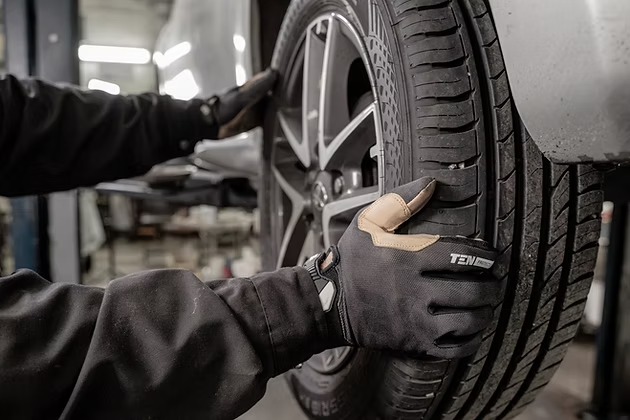
Neither choice is wrong. The wrong choice is running tires that don’t meet highway requirements — or worse, tires with worn tread that technically have the right symbol but can’t actually perform. If you’re unsure about your current tires’ condition, our brake and suspension checks include a full tire inspection so you know exactly where you stand.
The Bottom Line
All-weather tires vs winter tires in Kamloops comes down to this: both can be legal, but the right choice depends on your actual driving. For most folks who stay local, quality all-weather tires are a practical solution. For anyone regularly hitting mountain highways in winter, dedicated winters are worth the extra effort.
Not sure what’s best for your situation? We’re happy to look at your current tires and talk through your options — no pressure, just straight information. Reach out to us at Brock Auto Centre and we’ll help you figure out what actually makes sense.
About the Author: Steve is a co-owner of Brock Auto Centre at 1128 Tranquille Rd in Kamloops, BC. With years of hands-on experience in the automotive industry, he’s committed to giving customers clear, honest answers about their vehicles — whether that means recommending a repair or telling you something can wait.